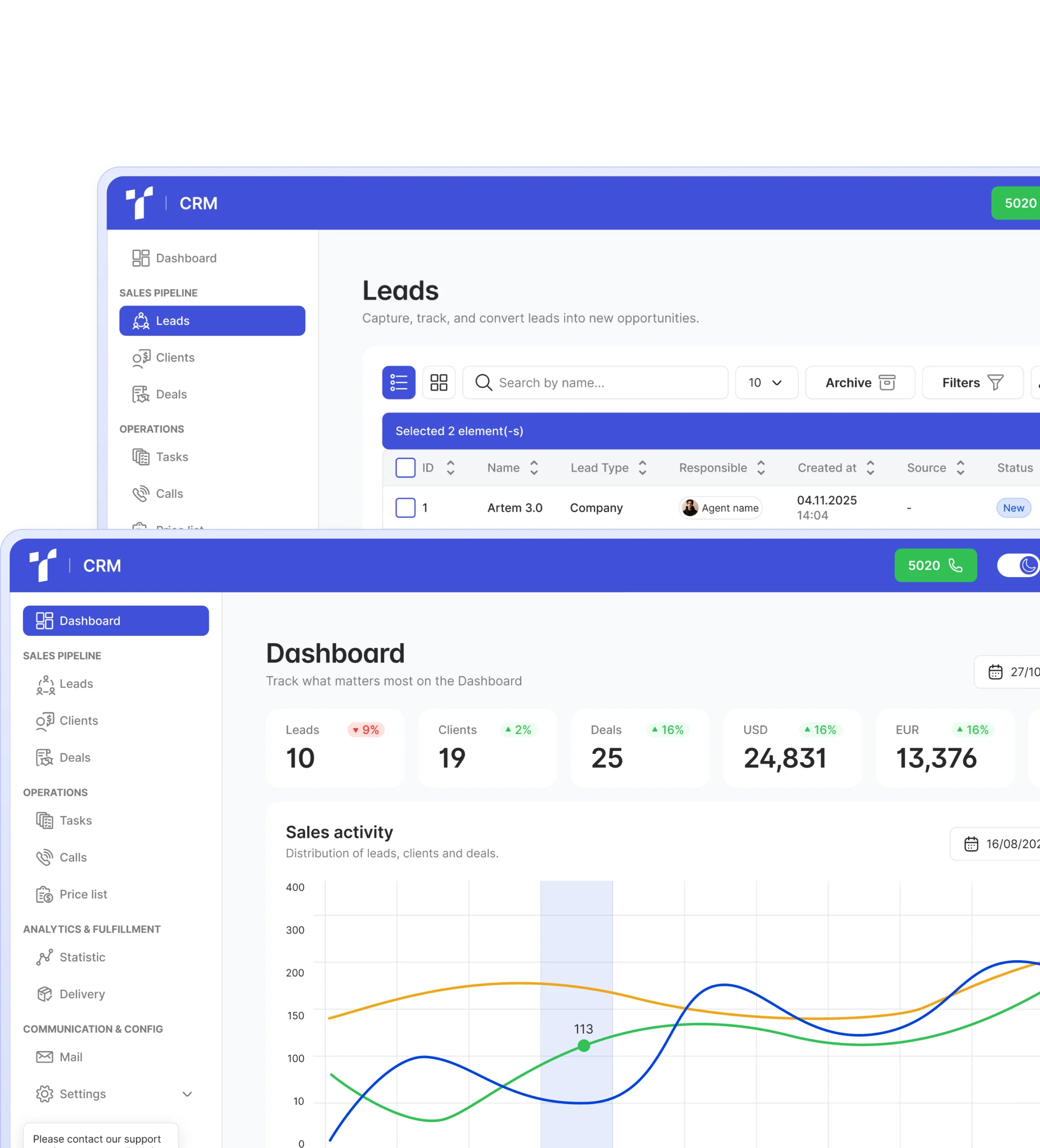
Make customer and lead communication predictable, scalable and cost-controlled
Control operational load, reduce hidden communication costs and scale without adding more systems.


















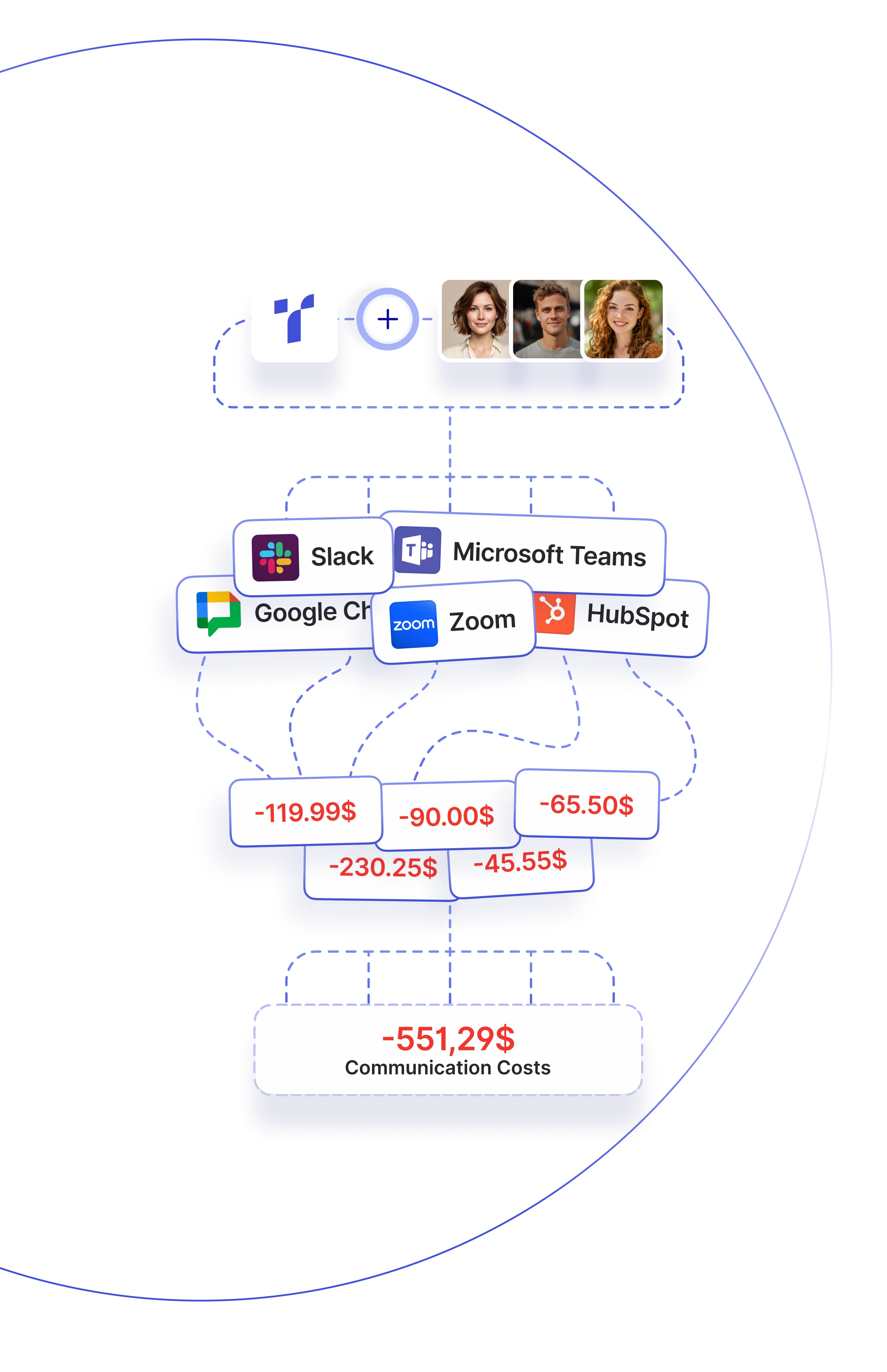
When your company grows, communication costs grow faster than revenue
Not because of bad decisions — but because communication infrastructure scales chaotically by default.
As teams, channels and regions scale, communication tools, vendors and integrations grow independently, spreading costs and ownership across the organization. What looks like normal growth quietly turns into uncontrolled operational load and rising Total Cost of Ownership — this is an architecture problem, not an efficiency issue.
- Multiple overlapping communication tools
- Costs hard to forecast
- Each new team increases complexity
- Fragmented call data and analytics
- Cost optimization feels risky
Calls, recordings, analytics and integrations live in different systems
Separate call tools per department

Sales, support and operations often use different calling platforms, making it impossible to manage communication as one operational workflow.
Analytics scattered across tools

Call performance, quality and cost data are exported into spreadsheets or BI tools instead of being available in a single operational dashboard.
Communication spend split across vendors

Calls, numbers, recording and analytics are billed by different providers, making real Total Cost of Ownership difficult to track and forecast accurately.
Local optimization creates complexity

Teams choose tools that solve their immediate needs, but over time this creates fragmented workflows and higher operational load company-wide.
Parallel integrations maintained by IT

Each communication tool requires its own CRM and workflow integrations, increasing ongoing maintenance effort and technical debt over time.
Fragmented communication silently increases costs and operational risk
You don’t see it as a single line item — but you pay for it every month.

Adding another communication tool doesn’t reduce costs — it increases them
Tool-per-problem decision making
Growing vendor dependency
Slower changes
Higher operational risk
The real problem is not too many tools. It’s fragmented ownership of communication.

Conflicting KPIs
Departments optimize communication around performance metrics — cost, speed, conversion or uptime. Without shared ownership, these priorities gradually degrade overall customer experience and efficiency.

Parallel Integrations
Multiple teams build and maintain separate integrations for similar communication flows. This duplicates infrastructure, increases maintenance load and creates hidden technical debt that slows every future change.

Vendor Overlap
Different departments adopt overlapping communication vendors to solve local problems. This inflates licensing costs, weakens negotiation leverage and reduces visibility into total communication spend.

Exponential Stack Growth
As companies scale, each new market, channel or team adds new tools and workflows. Without centralized communication ownership, complexity grows faster than revenue and becomes harder to control.
Traditional telephony doesn’t solve fragmentation. It often makes it worse
Most communication platforms are designed to sell features — not control cost or architecture. Cloud PBX works for simple environments but becomes another isolated layer in complex organizations, increasing dependencies and cost visibility gaps.

Optimized for:
per-user licensing, feature expansion.

NOT optimized for:
TCO control, architecture consolidation, single data source.

Teliqon turns fragmented communication into one controlled operating system
One operational layer connecting calls, routing, recordings, analytics and integrations.


Unified call infrastructure
Teams keep adding new tools to solve isolated tasks. Over time, this multiplies systems, increases overlap and makes communication infrastructure harder and more expensive to control.



We centralize communication into one controllable operational layer
Calls, costs, access and data governed from a single system.
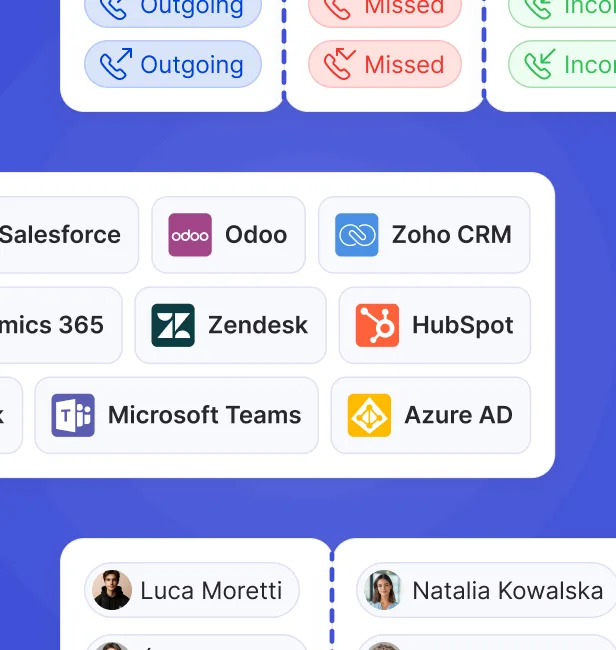
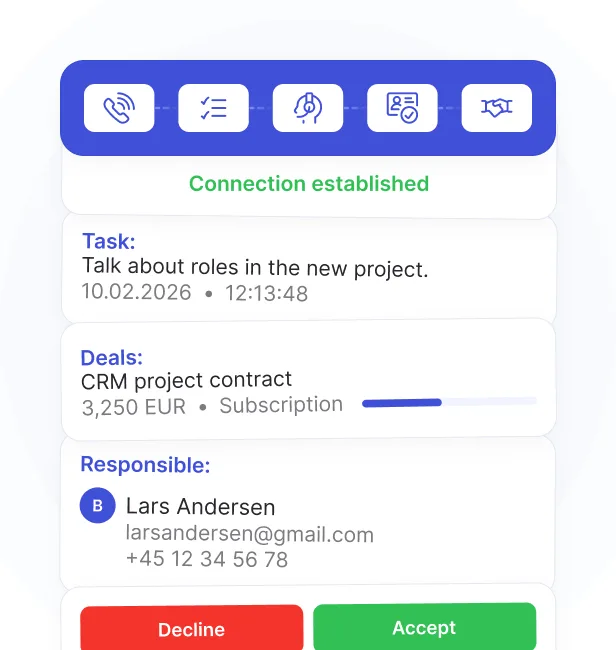
Centralize Communication
Consolidates calls, routing, integrations and vendors into one operational communication layer, eliminating fragmented infrastructure.
Standardize Operation
Unified call flows, routing logic and performance metrics create consistent communication processes across teams.
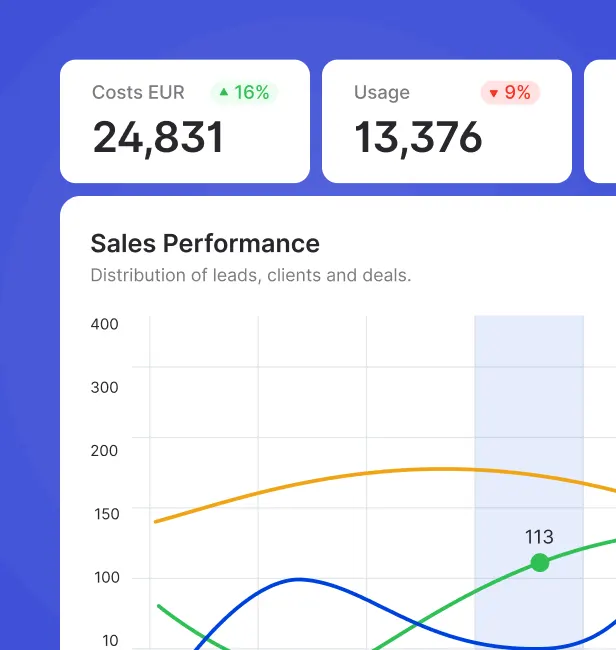
Gain Real-Time Control
Monitor costs, usage, access and performance from a single dashboard, enabling faster decisions &reducing spend.

Scale Without Stack Growth
Launch new teams, markets and workflows without adding additional communication systems or rebuilding integrations.
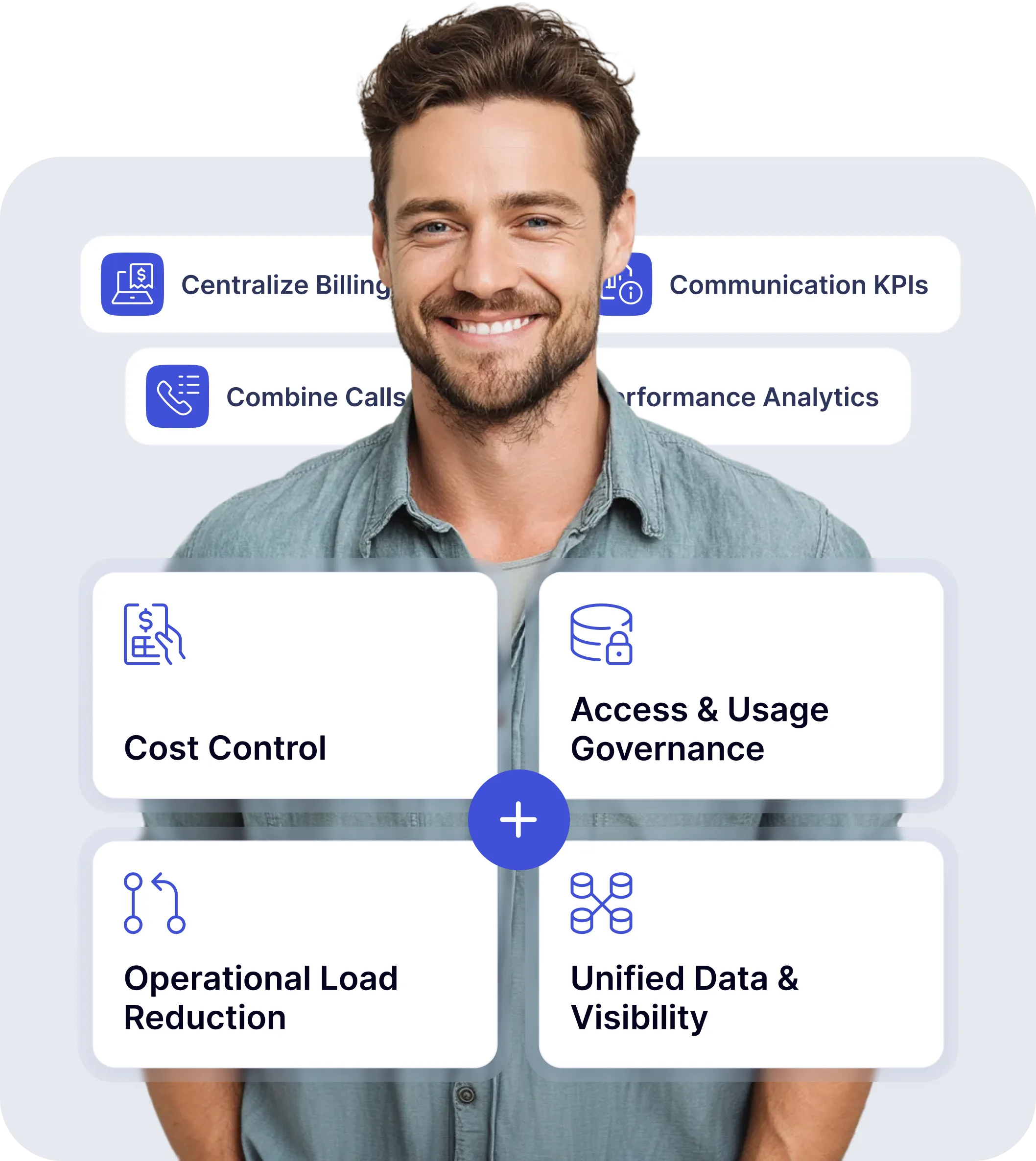
Four control dimensions determine communication cost, risk and scalability.
Cost Control
Access & Usage Governance
Operational Load Reduction
Unified Data & Visibility
Same call volume. Completely different economics.
Teliqon changes the ownership model of communication from fragmented to controlled.
Before Teliqon
After Teliqon

Multiple communication tools across teams and departments

One centralized communication platform across teams and regions
Separate vendors, contracts and billing models
Unified vendor, contract and cost structure
Call data, recordings and analytics stored in different systems
Calls, recordings, analytics and routing managed in one system
Parallel integrations maintained manually by IT
Single integration layer connecting CRM and business tools
Communication costs visible only after invoices arrive
Real-time visibility into usage, performance and cost allocation
Scaling requires adding new tools, vendors and operational overhead
Scaling new teams, markets or channels without adding new systems
High dependency on individual systems and fragile integrations
Reduced vendor dependency and stronger infrastructure control
Limited visibility into usage, performance and real cost drivers
Predictable communication cost model aligned with business growth
Teliqon is implemented without disrupting operations
Infrastructure Audit
We analyze your current communication stack, vendors, integrations and cost structure to identify duplication, risks and consolidation opportunities.
Architecture Design
We design a centralized communication operating model tailored to your global teams, workflows, regions and existing CRM ecosystem.
Phased Migration
Numbers, routing, integrations and call flows are migrated gradually to avoid disruption and maintain seamless long-term operational stability.
Team Onboarding
Legacy and Teliqon systems run simultaneously while teams are trained and processes aligned, ensuring a safe and controlled rollout.
Communication infrastructure usually costs more than companies think.
Communication spend is fragmented across licenses, integrations and operational overhead. Consolidation makes cost transparent and controllable.

Reduced vendor and licensing cost

Lower integration maintenance

Reduced operational workload

Faster onboarding

Predictable cost structure
Teliqon is Not for Every Company
It is built for organizations where fragmented communication creates measurable cost, risk and scalability limitations.
Who this is for
Highest impact in multi-team, multi-region communication environments.



Who this is NOT for
Not a fit for low-complexity communication environments. Created for multi-team, multi-region operations.



See where your communication infrastructure is leaking money, complexity and risk
Executive-level communication audit with clear optimization opportunities — no migration commitment required.

Stack audit
We map your full communication ecosystem across tools, vendors, integrations and ownership layers. Most companies discover dependencies and overlaps they didn’t know existed.


Cost & duplication analysis
We identify where communication costs are hidden, duplicated or structurally inflated across departments and vendors.
This usually reveals immediate consolidation and cost-reduction opportunities.


Architecture evaluation
We assess scalability risks, integration fragility and operational bottlenecks in your communication layer.
This highlights where growth will increase complexity, risk and support overhead.


ROI estimation
We model potential savings, operational efficiency gains and long-term TCO reduction scenarios.
You get realistic financial visibility before making any infrastructure decisions.


Consolidation roadmap
We deliver a high-level step-by-step plan showing how communication can be simplified without operational disruption.
This becomes a strategic blueprint for future infrastructure decisions.

This is not a product demo.
It’s a structured evaluation of your communication stack designed to uncover hidden costs, duplicated infrastructure and scaling risks — before they impact growth or margins. You leave the consultation with a clear, prioritized optimization roadmap — whether you work with Teliqon or not.
Communication should be a controlled, scalable business infrastructure.
Companies that consolidate communication gain cost control, long-term scalability and predictable cost structure and operational clarity.


Unified communication logic
A single communication logic removes conflicting workflows and eliminates operational friction between teams.
Decisions become faster, processes become predictable, and the organization operates with one consistent customer interaction standard.


Reduced technical debt
By eliminating duplicate integrations and overlapping tools, companies reduce long-term maintenance costs and dependency on fragile system connections.
This frees IT resources from constant support and allows teams to focus on growth instead of infrastructure firefighting.


Improved customer experience
Consistent routing, recording and interaction visibility ensure customers receive the same service quality across teams, regions and channels.Predictable communication increases trust, improves conversion rates and strengthens long-term customer retention.


Scalable infrastructure
Communication infrastructure grows with the business without multiplying tools, vendors or operational overhead.
New teams, markets and call volumes can be launched faster, with lower risk and fully predictable cost structure.
Simplify communication. Reduce operational noise. Scale with control.
Replace fragmented infrastructure with a platform designed for growth and efficiency. Teliqon enables transition from chaotic communication ecosystems to transparent and scalable operational models.
- Fewer systems
- Lower costs
- Higher visibility
- Greater scalability