




Serhiy Bohush
March 13, 2026
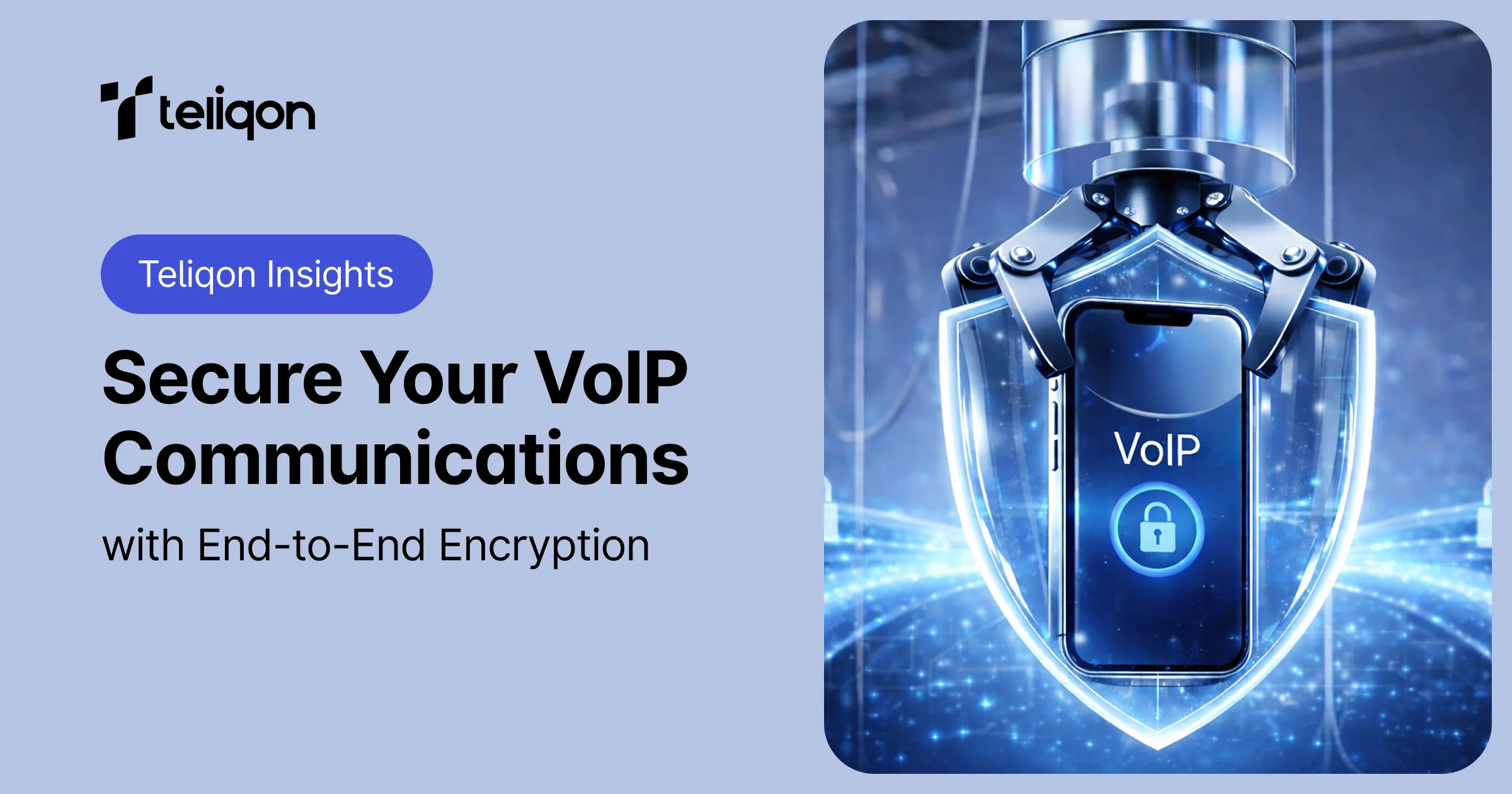
Secure Your VoIP Communications with End-to-End Encryption | Teliqon Insights
VoIP has become a standard choice for business communication. It lowers costs, supports remote teams, and makes it easier to manage calls across locations.
However, because VoIP operates over the internet networks, security cannot be overlooked. Without proper protection, calls and signaling data may be intercepted or misused.
In this article, we explain how VoIP encryption works and why securing your communications is essential for protecting sensitive business conversations.
Understanding Encryption in VoIP
First thing first – what is VoiP?
Voice over Internet Protocol (VoIP) is a technology that enables voice and multimedia communication by converting audio into digital data and transmitting it over the internet.
Without encryption, data packets can be intercepted. Encryption scrambles this data, ensuring only the intended recipient can decode it.
This protection is essential because internet communication differs from traditional phone lines. Unsecured VoIP traffic is vulnerable to eavesdropping and man-in-the-middle attacks, where calls can be intercepted or altered unnoticed.
Weak security also risks exposing sensitive business information and causing data leaks.
For businesses, the stakes are higher. VoIP calls often contain client details, pricing, financial data, or strategic plans. Encryption prevents unauthorized access, reducing risks of reputational damage and regulatory penalties.
In certain industries — including finance, healthcare, and e-commerce- encryption is often mandatory.
Regulatory frameworks require secure transmission of sensitive data. Implementing VoIP encryption supports both security and compliance. Business conversations protect sensitive information and ensure communication stays secure as it moves across the internet.
VoIP Security Risks
We already touched on it in a previous chapter but let’s dive deeper.
Voice and multimedia traffic use the same internet networks as emails, files, and web browsing. While this setup is flexible, it also means phone calls face the same risks as other internet-connected systems.
A common problem is eavesdropping. If signaling or media streams aren’t encrypted, anyone with network access could capture those packets and listen in on parts of the conversation. It’s like overhearing a phone call in a coffee shop, but this time the “shop” is the entire internet.
Another risk is interception and call manipulation. Without proper protections, attackers can insert themselves into a call session, reroute calls, inject audio, or even trick users into exposing information. This kind of exploit doesn’t require physical access — it can happen through poorly configured network equipment or exposed VoIP ports.
Unauthorized access is another serious concern. Weak passwords or default login details can let attackers gain access to your VoIP system by impersonating real users, leading to toll fraud or misuse of your calling resources.
Denial-of-service attacks can flood your VoIP servers or network connection, making it difficult or impossible for legitimate calls to get through. For organizations that rely on phone systems for customer support or sales, even a short outage can have a noticeable operational impact.
Common VoIP Encryption Protocols and Methods
To secure VoIP, it’s important to understand that different parts of a call need protection. A phone call over the internet has two main components: the signaling process that sets up the call and the media stream that carries the voice. Each layer uses specific encryption methods.
TLS (Transport Layer Security) is commonly used to secure signaling data. When you place a VoIP call, signaling protocols like SIP handle call setup, authentication, and session management. TLS creates an encrypted connection between the device and server so information such as user credentials and call details cannot be intercepted or modified.
To protect the voice itself, systems use SRTP (Secure Real-Time Transport Protocol). SRTP encrypts audio packets in real time during the call. It also verifies message integrity and protects against replay attacks, where intercepted data is resent maliciously. This ensures that even if someone captures the traffic, they cannot listen to the conversation.
In some environments, additional technologies may be applied. SIPS is a secure version of SIP that runs over TLS, strengthening call setup protection. ZRTP provides end-to-end encryption by generating keys directly between call participants, rather than relying solely on a central server. This can increase privacy in certain use cases.
For organizations requiring higher network-level protection, IPSec can encrypt IP packets at the network layer and VPNs can create secure tunnels for VoIP traffic. While not encryption protocols, technologies like MPLS can segment voice traffic from other data, reducing exposure within complex networks.
The choice of protocol depends on business requirements, infrastructure, compliance needs, and interoperability. In most modern cloud VoIP systems, TLS and SRTP form the technical foundation for secure communication, with additional layers applied based on security policies and risk profile.
Benefits of Encrypting VoIP Communications for Business
Encrypting VoIP traffic is more than a technical update. It directly improves the security, compliance, and reliability of your business communications.
1. Protection of confidential conversations
When calls use encryption protocols like TLS and SRTP, the voice data is turned into unreadable packets while it’s being sent. So, even if someone intercepts the traffic, they won’t be able to decode it without the right cryptographic keys.
2. Reduced risk of call interception & fraud
VoIP systems without encryption are more open to eavesdropping and SIP hijacking. Encryption stops attackers from getting signaling data or joining active calls.
3. Compliance with data protection requirements
Many industries need personal or payment information to be sent securely. Encrypted VoIP helps meet these rules by protecting call data during transmission. For businesses handling card payments, encryption also supports PCI DSS compliance.
4. Stronger authentication and session integrity
Encryption does more than just hide the call’s content. It also confirms that the people on the call are who they say they are and that the data hasn’t been changed while it was sent. This stops tampering with call setup details and keeps the session secure.
5. Greater trust in digital communication systems
When encryption is part of your VoIP system, communication is more secure and reliable. Teams can trust the system without worrying about hidden risks, and customers feel confident their information is safe.
Encryption is no longer optional for modern VoIP systems. It protects your conversations, reduces operational risk, and strengthens the trust your customers place in your business. Secure communication is part of long-term reliability, not just a technical feature.
If you’d like to understand how these security layers can be applied to your infrastructure, book a demo with Teliqon. We’ll explain the technical specifications and show how secure VoIP can be implemented for your specific business needs.
Serhiy Bohush

Follow Us in social networks


The latest from Teliqon
Stay ahead with insights from the leader in trusted communications. Subscribe for the latest blogs, updates, and exclusive content.