



Arthur Kyselevskyi
January 21, 2026
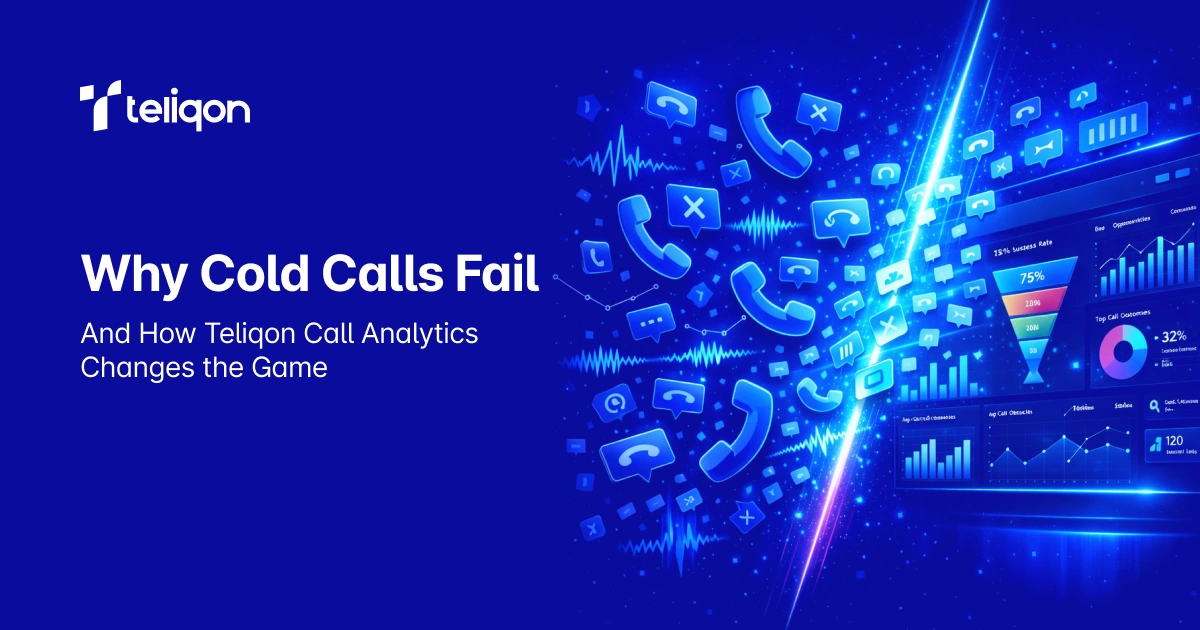
Why Cold Calls Fail — And How Teliqon Call Analytics Changes the Game
Why does cold calling still seem more difficult than it should be, even when your team is calling more often than ever? Low response rates, missed follow-ups, and unclear results often leave sales teams wondering what went wrong and what needs to be improved. Without clear visibility, cold calling becomes a repetitive effort with unpredictable results.
Keep reading to find out common business’ mistakes and how Teliqon Analytics helps transform cold calling into a measurable process.
Mistake #1: Calling Without Understanding Caller Behavior and Intent
One of the most common mistakes companies make when cold calling is treating every call the same. Teams go through lists without knowing where the calls are coming from, why prospects are engaging, what’s driving interest or churn. As a result, agents waste time on low-intent contacts, repeat ineffective approaches, and miss signals that could steer conversations toward better outcomes.
Teliqon Analytics helps teams track caller behavior and intent by showing when people respond, how they interact during calls, and which touchpoints lead to actual engagement.
Combined with conversion funnels and bounce analytics, this data shows where prospects are losing interest and where conversations are moving forward, so teams can adjust timing, messaging, and follow-up based on facts, not assumptions.
Analytics’ use case:
A B2B SaaS company noticed high call volume but low appointment rates. Using Teliqon Analytics, they discovered that the majority of conversations they engaged in were following a missed call, followed by a quick callback within 15 minutes.
By setting up workflows and prioritizing these callbacks, the team increased the number of scheduled appointments without increasing call volume – simply by responding to proven signals of intent.
Mistake #2: Ignoring Agent Performance and Call Quality
The second common mistake is failing to measure how well agents are actually handling calls. Many teams focus on just a few sets or talk times, but these metrics don’t show whether calls are effective or if training is needed. Without understanding agent performance and call quality, it’s impossible to identify training gaps or ensure a consistent customer experience.
With agent performance and call quality analytics, you can monitor response times, conversation outcomes, conversation patterns, and the impact of individual agents.
Combined with call detail records (CDRs) and real-time dashboards and alerts, you get clear insights into which interactions are working and which need improvement. Managers can quickly see when an agent’s call volume is declining or update who is exceeding performance benchmarks.
Mistake #3: Failing to Identify Drop-Off Points in the Conversation Funnel
Without understanding the conversion funnel and drop-off points, teams can’t see if people are hanging up early, losing interest mid-presentation, or consistently stopping engagement at certain steps. This turns strategy into guesswork and hides weaknesses.
Teliqon Analytics tracks conversion funnels and drop-off points, allowing you to track a caller’s journey from the first call to the final outcome.
By analyzing where people are abandoning the call or moving on to the next stage (e.g., from greeting to presentation), you can fix weaknesses and optimize scripts, call timing, and agent approach.
Combine this with custom filters and smart sorting, such as by call duration, outcome, or tag, and you can highlight the most important patterns.
Our use case:
A B2B consulting team noticed that while many calls were being answered, very few were converting to appointments. Teliqon’s sales funnel analysis revealed a consistent pattern: calls were often dropping off right after the initial introduction, before the value proposition was even presented.
The team restructured their introduction to immediately focus on the pain point of the prospect, and repurposed the introduction scripts to better match the needs of the segment. Within a month, the number of calls that completed the first transition stage increased by 29%, and the number of qualified appointments increased proportionally.
Cold calling becomes difficult when teams don’t know what’s working and what isn’t. Without clear insight, calls turn into repeated effort with little improvement over time. Book a demo with Teliqon to see how real-time call analytics can help you spot issues faster & improve performance.
Arthur Kyselevskyi

Follow Us in social networks


The latest from Teliqon
Stay ahead with insights from the leader in trusted communications. Subscribe for the latest blogs, updates, and exclusive content.